Showing posts with label Protect Shivapuri Environment. Show all posts

Sunday, April 19, 2009

Hiking to Kakani and Socio-Political Musings in Kathmandu


Yesterday, since I didn’t feel like doing a strenuous hike at Shivapuri, I went to Kakani… …Once you reach to a certain height, you wish to go higher next time…just a few days ago, even getting to Panimuhan at the foothill of Shivapuri and looking toward Kathmandu was a great experience…then reaching Nagi Gompa and watching the panoramic spread of Kathmandu Valley was another great experience…then reaching the Shivapuri Height and watching on the other side from a huge rock was a magnificent achievement…My limitation is that I have to reach a destination and get back to my room the same day…

I was visiting Kakani for the first time…Got up and put a water bottle in the bag...this time I though of taking my bag to carry water as the days are getting hotter...and yes, i bought a binocular that cost about 500…i was simply fascinated with binoculars…lately I’d begun noticing birds and butterflies as well…so took the binoculars so that I could watch them closely…

Reached the Naya Bus Park and then Machapokhari Bus Stop where you can find buses for Trishuli…I’d been up to Osho Nagarjun Meditation Retreat before, but not beyond that….so i didn’t know where you get off for Kakani…i kept reading the signs for knowing about the place names…Tinpiple, Okharpauwa…then I got off at a comparatively larger market as I read a sign say Kakani…But later found that it was not Kakani, you have hike upward to get to Kakani…

After eating Sel Tarkari at a roadside Chiyapasal, I asked a boy there if it was Kakani…no he said….you’ve to walk half an hour up for Kakani…However, it seemed to the right place to get off from the bus to Trishuli…The boy said it was called Kauli…the thing I noticed in Kauli was children selling strawberries, and another local yellow colored berry found in higher moutains in Nepal...called locally aiselu…I don’t know what it’s English name… I remember picking aiselu when I was a kid…You can see strawberries grown around Kakani in Kathmandu as well, but I’d not seen aiselu being sold anywhere in Kathmandu…even in Kakani, there were not much Aiselu...a few kids were selling it on leaves...Strawberries were introduced by the Japanese and now farmers around Kathmandu cultivate it as a cash crop…But Aiselu is still a wild berry of Nepal…

Another thing that I noticed at the Chiyapasal and at other places were the flies, and the lack of hygiene… Even so near to Kathmandu and with all basic facilities, Kakani people were not different from village people of other parts of Nepal…The area seemed to be Tamang dominated…it was really interesting to see that just ten kilometers away from Kathmandu where the Newaris dominate, you could hear a different language and kids with slightly different features than Newars…However, the most common trait that I noticed among the Tamangs and the Newars or Jyapus of Bhaktapur where I’d visited last week was that both people had pathetically poor sense of hygiene….

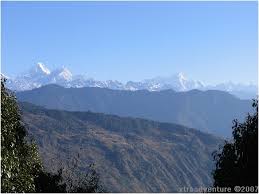
While I was going up…sometimes on road…and sometimes off road…I suddenly arrived at a place from where appeared the Himalayas far away…it was about 10 in the morn…and the sky was getting misty…but I was happy to see the Himalayan peak…and took out the Binoculars to get closer views…but I found that Binos are only good for watching things just away from your vision…or smaller things within your vision…about 2 hours later, even those hazy views of Himalayan peaks were not visible…due to white clouds above them…

Three things that I enjoyed most in my Kakani Visit were:

I saw an eagle from the bus soaring below me while heading toward Kakani…

Walked down to the main road from Kakani top finding my own way in the mountain shortcut trails…I so hate walking on the roads

Traveling on the roof of the bus while returning…you don’t always get the opportunity of an open travel on the bus top…it was my first travel on the bus roof in five years…and views from the roof are truly awesome!

What I hated most on the Kakani Road:

Poultry Farming…you certainly do not enjoy the awful stench that come from Poultry Farms near the road…

Fish Farming by blocking natural Waterfalls…

While retuning from Kakani, I was happy that i was from Nepal who can walk into the mountains just by getting out of his room…I was also happy that I realized the pleasures in of walking in the mountains before it was too late…before I was too old to walk…

Kakani is no different form any other place in the mountains…except that it is easily accessible, with all basic needs for travelers and picnickers, and yet isolated from Kathmandu’s hustle and bustle…

Tuesday, March 31, 2009

Rains in Kathmandu Nepal & Change in Shivapuri National Park


This is it! After a week of hide & seek, it really rained heavily for an hour on Sunday evening…that too unexpectedly…Kathmandu received a record rain of 19 mm in just an hour…and hails too…it really felt nice to see the wet leaves and small water ditches on the road 12 hours after the rain…the ground was so dry that the earlier showers were just soaked up leaving no traces of rain…but despite the winter drought, the Sunday and Monday’s evening rains kept their promise of the coming monsoons…I’m sure that all wildfires must have been quenched by now…& Shivapuri too would be different than i saw last week…

Monday, March 23, 2009

Social Needs in the Wilderness - Babas at Shivapuri Hill – Todke Baba


Baba: a human being
Humans are everywhere the same…even in the wilderness they behave according to their social training…even the solitary babas living inside tree holes (todka) feel pressed to behave socially…on the way upward from Baghdwar to the Shivapuri Top met a Baba inside a tree trunk…after i did him namaste he asked me in a typical hilly tone, ‘katabat aaunu bho koni, kata jan lagnu bho?’ (where you come from man, & where you going?) After my answer a social being spoke through the Baba, ‘have some tea first man?’ since it was getting darker due to the clouds, i told him that i’d meet him again after i return from the Top.

While walking down, I thought of chatting with the Baba a bit…asked him if he was the Todke Baba…’no, he live downhill these days, i’m living here for some six months…i was at Sundarijal before’…i told him that I really enjoyed the hill forest…’who wouldn’t enjoy Lord Shiva’s Durbar after all’ he commented, ‘we’re in bliss here….so much peace’ he was making some green leaves on a pan over firewood which he called wild veggies.. he again asked me to have some tea, but I felt like he was only being social…so said that I was getting late. He asked me to stay at his place…which was a big hole on a tree trunk…

Noise in the wilderness
At the downhill Kuti were three Babas with two other men around the Dhuni (Baba’s Bonfire) …it’d begun raining so I thought of getting over my shyness and chat with the Babas there…the Baba whom i recognized from a picture posted on the net as Kopche Baba was there…But when I asked him if he was the Kopche Baba… he answered with some uneasiness that Babas do not have any names…it’s the people who give them a name…& Kopche Baba was named so because of his old age & stooping figure…Another Mongolian looking man said that this was the Todke Baba…Todke Baba said that Kopche Baba had already passed away…the the Cemetery above and the cave below the cliff was Kopche Baba’s.

Todke Baba
Todke Baba began talking on the nature of the divine and malpractices in religions Another Bramhin looking man of about my age was more talkative…in fact I did not find anything holy in their talk…all they were talking about the malpractices…the two youths seemed to have come there for enjoying the Hashish smoke, which all of them began taking from the Chilim…Todke Baba was smoking from the Cigarette…After sometime Baba asked time with another fellow Baba…it was quarter to five…then he asked me if I’d stay there…I’d have certainly enjoyed staying there…but i’d to come back…sometimes family becomes more of a liability than need…moreover, I did not enjoy talking and making arguments even when you’re in the jungle…as it was still raining, Baba asked me to take his Umbrella or raincoat…but I did not want to take anything from Baba…

Todke Baba looked happy & friendly, but he did not seem to enjoy company…in fact I did not find anything special about him…but although i’d taken him for a person of Nepal Hills…he sounded like an Indian from his manner of speaking…

Sunday, March 22, 2009

Call of the Shivapuri Wild & Return Back to Kathmandu


I returned from the Shivapuri Height this time as well…with more experience & confidence…the most annoying part was the return walk from the National Park gate at Panimuhan to the Bus Park at Bhudanilkhantha. I was a bit late to catch the microbus at the gate when i got there at quarter to seven…so had to walk further to the Bus Park. As i had already spent my stamina, & the ankle joints were aching feverishly, really got a headache by the time I caught the micro. Another reason for tiredness and aches was my foolish & unsuccessful attempt again to bypass the winding road and hiking up and down the hills to reach Nagi Gumba. What I learned so far is that you can not cut short the main road to Gompa by more than one ridge upward and without losing your sense of direction …

Otherwise it was a momentous hike this time…and mostly due to the weather that allowed for a thrilling experience, and at the same time refrained from harming me in any way…yes, when you’re way thru in the mountain jungles, you feel like deifying everything…and would like to believe in the divine designs & divine cares for you…from the call of the Shivapuri Hills to the thunders over them…

Friday, March 20, 2009

Fire in Nepal Moutains: Human or Natural Disaster

Wildfire at Shivapuri?
Seems like it’d rain this evening…the sky is getting darker with clouds and occasional thunders…nothing is more welcome these days than the rains …The news reports say that Nepal’s jungles are seeing the largest wild fire in history. The Terai jungles see wildfires every year, but never before were there wildfires of this scale in the Himalayan regions. They say even the Shivapuri region is facing the wildfire. Why not, after all? While walking though the parched dry grasses & heaps of fallen dry leaves, the first thought that came to my mind was that a single spark can create a wildfire there. I saw several empty packets of PILOT cigarette. The villagers & low income people use the PILOT brand cigarette for its low cost, & I’d seen villagers gathering firewood in my both last visits. I also found a lighter at a grass opening chaur before reaching Baghdwar.

Environment: Whose Responsibility?
I feel like accusing the authorities at Shivapuri for its environmental degradation & wildfire. The army personnel, people at Nagi Gompa, and the Babas staying there may also be responsible. However, conserving a national forest near a heavy human settlement is easier said than done. And looking at the number of visitors and easy accessibility, the conservation efforts are certainly admirable.

Acrophobia at Shivapuri Height
I was really overwhelmed by the views seen from the Top toward the other side of Shivapuri. The Kathmandu side looks familiar from the Top, but the northern side appears & sounds really wild – except for a winding road seen far away. I climbed a huge cliff near the top, and when i looked at the views below it, a sort of dizziness swept over me…this was a place for testing one’s acrophobia…and I was really afraid to stand on the rock and look down…so i stepped back and crouched on my front…still, looking down from the rock sent shivers thru my body…I also realized that its more difficult to climb down a rock than climbing it up… so i crouched & crept down to the ground… I find it hard to keep a balance while standing when I know that there’s a possibility of falling down…is it an evolutionary instinct or my lack of experience in climbing mountains?

Dangers of Wild Mountains
Last night when I was wondering over the supposedly brief showers on Wednesday evening, i suddenly realized that it’d be dangerous to walk on wet & slippery trails…a village woman i met on my first hike warned me against walking alone or off the main trail, for encountering a wild bear or leopard… and a staff at the gompa said that besides wild animals, being attacked by miscreants was also possible…the notice also warns against walking alone…when a wild monkey threatened me, or when i was lost near the top, or when I was looking at the other side of the cliff, i was really frightened for my life…I was even thinking if I would return & write my next episode on the blog…

Baba
I’m thinking of sitting with the Babas for some time at Baghdwar in my hike tomorrow…last time, during my return a friendly looking Baba asked me to have some tea after I did namaste to him……later while reading other’s experience on the net, i learned that he was either one of the two famous Babas there – Kopche, or Todke Baba. I also found his picture posted on the net.
i was touched by Baba’s hospitality, but i was also getting late, so told him that i’d come often & would talk to them next time…

Thursday, March 19, 2009

Dry Winter Spells & Environment Degradation in Shivapuri National Park Region


Hazy Mountains
I’ve been hiking in the Shivapuri Hills for the last three Saturdays – should I go again tomorrow? Wouldn’t making it regular diminish my interest for Shivapuri? But it’s rained yesterday after a long spell of dry winter this year. There are news of widespread forest fires in Nepal jungles including Langtang and Kanchenjunga mountain area. Some say they had not witnessed the winter drought of this year’s scale for the last forty years, and the wild fires are of the largest ever in record. Not only in forest area, but most parts of Nepal including Kathmandu and Pokhara sky is covered with haze, which the experts call a mixture of the smoke from wild fire and Asian Brown Cloud dusts. Perhaps, because of the haze, Kathmandu city was not visible from Nagi Gompa during my last visit. And the norther side of the Peak was also covered with haze.

Dry Spells
More than anything else, the rains are necessary not only for wildlife and vegetation, but for the village people depending on seasonal crops. Some villagers in Dolakha even married two frogs from different rivers believing that it’d bring the rains. The news of frog marriage itself is interesting. For the purpose, locals had brought agroom frog from Siple stream while the bride was brought to the marriage ceremony from Chukepani stream. Later, the two amphibian couple, donning marriage capes, was held on a plate for a ceremony as prayers were recited to bind them in matrimony. seven priests performed the the wedding rituals – and the locals also enjoyed a feast afterwards. Normally, you don’t believe that marrying frogs would draw the rains…but where things go hard, you’d like to believe anything.

Shivapuri Environment Pollution
During my last visit to Shivapuri, I’d also noticed that most of the creeks have gone dry, two or three remaining were just a trickle of water. The leaves and grasses have gone so dry that a spark might create an immense wild fire. What annoyed me most were the Plastics strewn everywhere – even below the creek at the Baghdwar. And at the top, i saw the half burnt Plastic bottles left from bon fires. Certainly you don’t enjoy seeing plastics everywhere inside a National Park conserved with the help of national army. In my all three visits, i saw wild parties with bellowing loud speakers inside the Park. There were also villagers collecting firewood. I also met a foreigner with his dog roaming inside the Park. The notice at the Park gate prohibits all these activities.

Protect Shivapuri
It should be made mandatory for every visitor to bring back what they take into the Park, and making Picnics inside the Park should not be allowed. Vehicles are allowed inside the Park buy taking some charges. But why do you allow private vehicles inside a National Park? Motorbikes and other vehicles should not be allowed inside the Park. The number of visitors in a day also needs to be controlled.

Although it didn’t rain that much in Kathmandu, i’m interested to see the changes the first showers of the rains that might have brought in the life of the flora and fauna. The Google map showed some clouds yesterday in the Shivapuri region.